
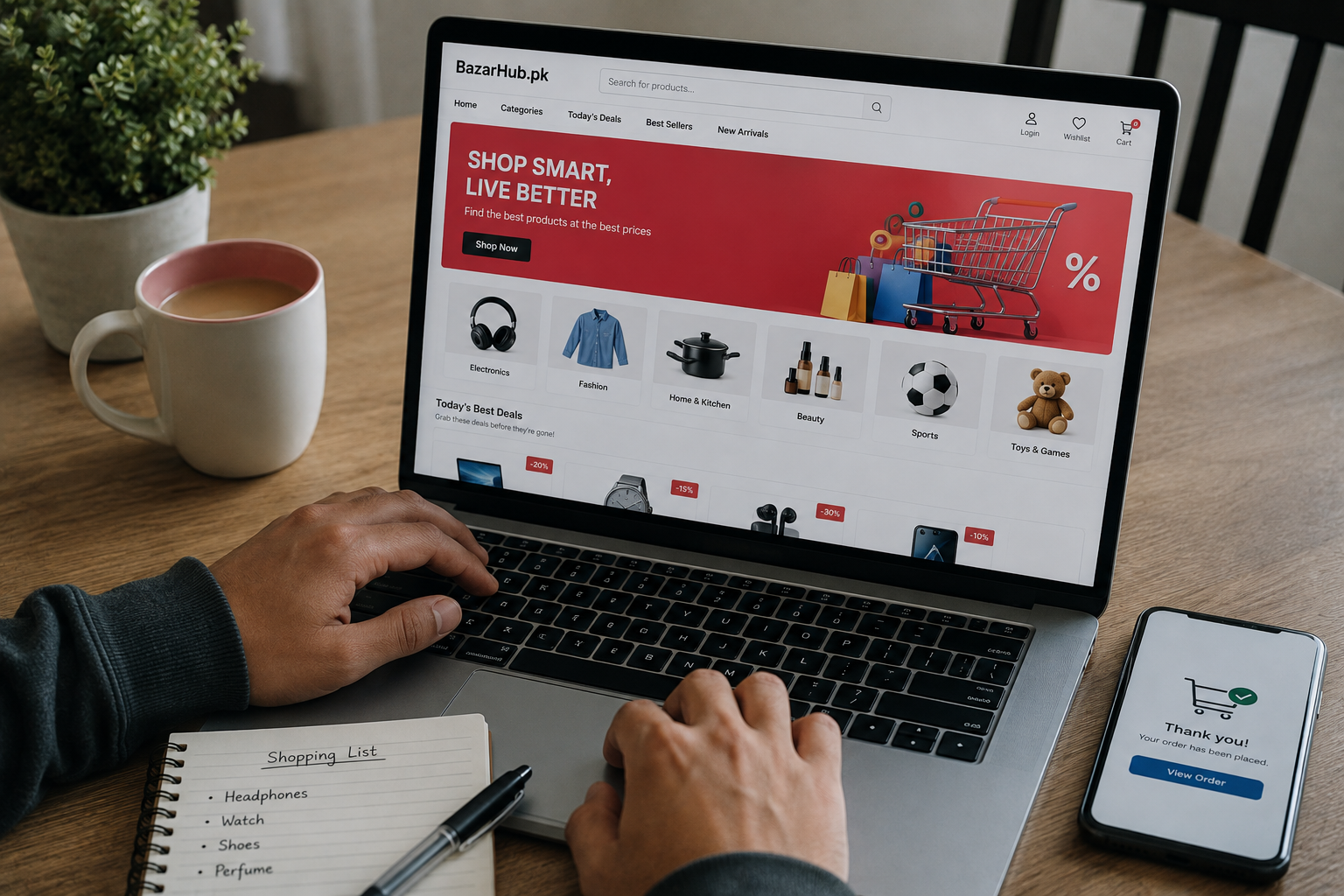
Guest Post by Bazar Hub
Online shopping has changed how customers discover products, compare options, and make purchasing decisions. For ecommerce businesses, having a website is only the beginning. Customers also want clear information, a straightforward buying process, reliable communication, and confidence that the business will deliver what it promises. These details can have a major effect on whether a first-time visitor becomes a customer and whether that customer returns. From my experience with online retail, customers usually want three things before placing an order: clear product information, a reasonable price, and confidence that the order will be handled properly. When these details are easy to find, the buying decision becomes much simpler.
Make Product Information Easy to Understand

A strong ecommerce store should make product information easy to find and easy to understand. Descriptions should explain the most important features without unnecessary jargon. Product images should accurately represent the item, and important details such as dimensions, materials, sizes, specifications, included accessories, and compatibility should be visible before checkout. Clear information reduces uncertainty and helps customers choose products that actually match their needs. For example, an electronics customer may want to know the product specifications, available features, compatibility, and what is included in the package. Providing these details on the product page can save customers from having to search elsewhere for basic information.
Create a Simple Buying Journey
Customers should not have to work hard to complete a purchase. A useful ecommerce journey normally starts with clear categories and search, continues with helpful product pages, and ends with a checkout process that explains the total cost before the order is placed. Businesses can also make the experience easier by keeping forms concise, showing available payment methods, and providing clear delivery information. When shoppers can understand each step, they are less likely to abandon an otherwise good purchase.
Build Trust With Transparent Policies
Trust grows when a business clearly explains what happens after an order is placed. Shipping times, delivery charges, returns, exchanges, and customer support options should be easy to locate. Businesses should avoid hiding important conditions in places customers are unlikely to see. U.S. Federal Trade Commission consumer guidance highlights the value of checking sellers and understanding transaction details.
Use Content to Answer Real Customer Questions
Helpful content can support an ecommerce store before a customer is ready to buy. Buying guides, comparison articles, sizing advice, product-care instructions, and frequently asked questions can answer common concerns without turning every page into an advertisement. This type of content can also help a store attract visitors who are researching a problem or product category.
Keep Branding Consistent
A consistent visual and written identity can make an online business look more established. The same tone, logo, product presentation, and basic design principles should appear across the website and other customer touchpoints. Consistency does not mean every page has to look identical; it means customers should feel that the same business is communicating with them throughout the journey.
Make Customer Support Visible
Even a well-designed store cannot answer every question in advance. Customers should have a clear way to contact the business when they need help. A visible contact method, useful FAQs, and timely responses can make the difference between a customer completing an order and leaving the site. After a purchase, order confirmations and delivery updates can also reduce uncertainty.
Use Digital Marketing as Part of a Larger Strategy
Ecommerce businesses often use search, social media, email, content, and advertising to reach potential customers. The strongest results usually come when these activities support the same business goals instead of operating as isolated campaigns. A coordinated strategy can help a business maintain consistent messaging, improve its online presence, and measure which activities are producing useful traffic and leads.
An Example From Pakistan's Ecommerce Market
Pakistan's online shopping market includes businesses serving customers in many different product categories. For shoppers who want to browse a range of products online, BazarHub.pk provides an example of a Pakistan-focused ecommerce destination. A store such as BazarHub can use clear category navigation, useful product information, straightforward ordering, and customer-focused content to make shopping easier.
Why Long-Term Trust Matters
A successful ecommerce business is not built only through one-time promotions. Long-term growth depends on customers having a reason to return. Accurate descriptions, dependable service, transparent policies, and useful content can all contribute to that relationship. Businesses should regularly review customer questions, support requests, returns, and feedback to identify areas where the shopping experience can be improved.
Conclusion
Ecommerce customers have more choices than ever, so businesses need to make the buying experience simple, transparent, and useful. Clear product information, easy navigation, honest policies, helpful content, visible support, and consistent marketing can all strengthen customer confidence. For businesses that need broader digital support, a coordinated service can also help connect website, content, branding, and marketing activities into one plan.
The future of ecommerce will not depend only on attracting visitors. Businesses also need to give those visitors good reasons to trust the store and complete their purchases. Clear communication, useful content, reliable service, and a simple buying process can help create stronger relationships with customers over time.